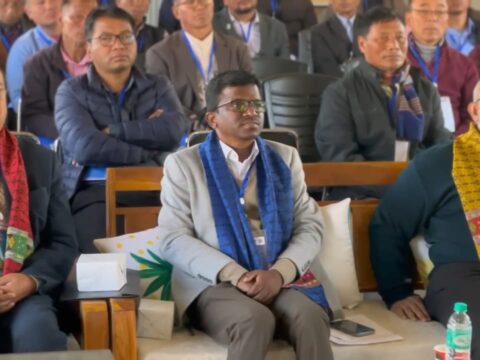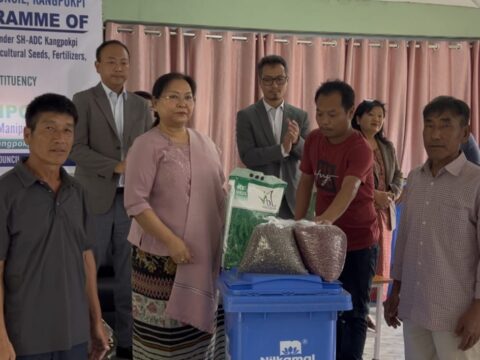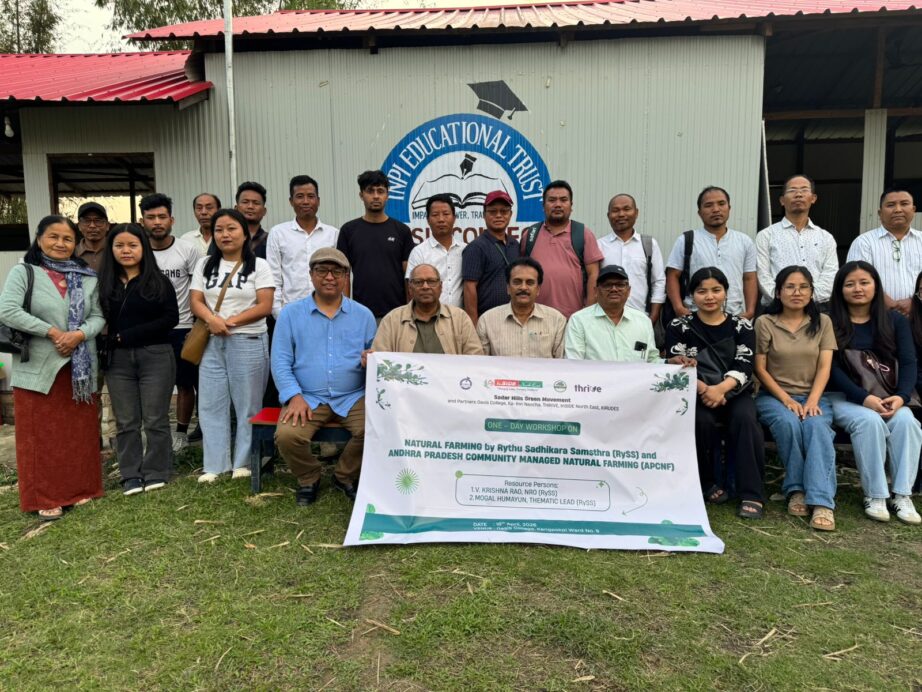
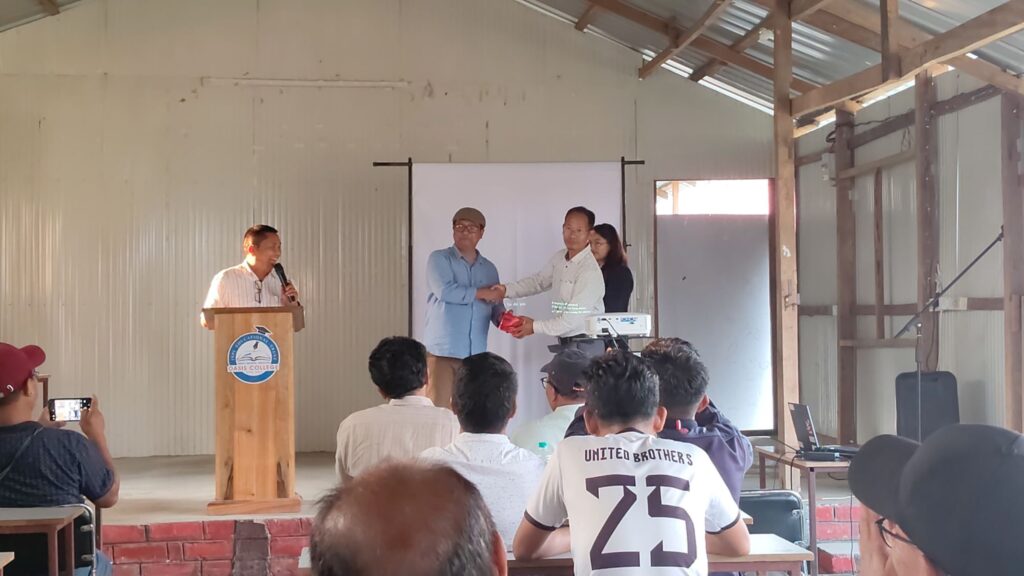
Kangpokpi: A one-day workshop on natural farming was successfully conducted at Oasis College, Ward No. 9, Kangpokpi yesterday. The programme was jointly organised by the Sadar Hills Green Movement in collaboration with Rythu Sadhikara Samstha (RySS) and Andhra Pradesh Community Managed Natural Farming (APCNF).
The workshop was held in partnership with Oasis College, Ka-Inn Neocha, THRIVE, InSIDE North East, and the Khankho Integrated Rural Development Society (KIRUDES). Ms. Grace Touthang, a DMLT student, served as the compere, while Dr. Onkholun Haokip, Coordinator of RDC, acted as the rapporteur.
Delivering the introductory address, Pu Gautam Mukhopadhaya emphasised the importance of aligning the green movement with natural farming practices. He highlighted that chemical-free farming is essential for both human health and environmental sustainability, adding that nature yields more when nurtured. He also stressed the need to promote local products, such as fermented beans (Bethu), through branding and agro-based enterprises to reach wider markets.
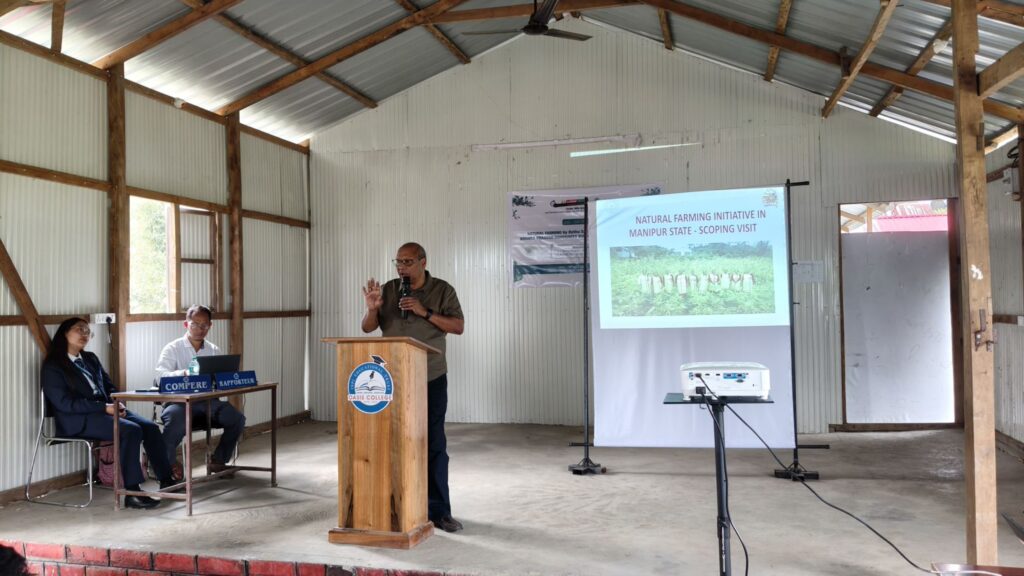
The first technical session was led by Mr. V. Krishna Rao, NRO, and Mr. Mogal Humayun, Thematic Lead from RySS, Andhra Pradesh. They elaborated on the concept of natural farming under APCNF, explaining its basis in soil microbiology and ecological nutrient cycling. The experts noted that natural farming reduces dependence on external fertilizers by activating soil microbes to naturally supply nutrients.
They also introduced key innovations such as Pre-Monsoon Dry Sowing (PMDS), the Any Time Money (ATM) model for small farmers, and the A-Grade model for diversified income generation. According to the speakers, these practices can significantly improve soil health, enhance water retention, and increase farmers’ income while offering a sustainable alternative to chemical-intensive agriculture.
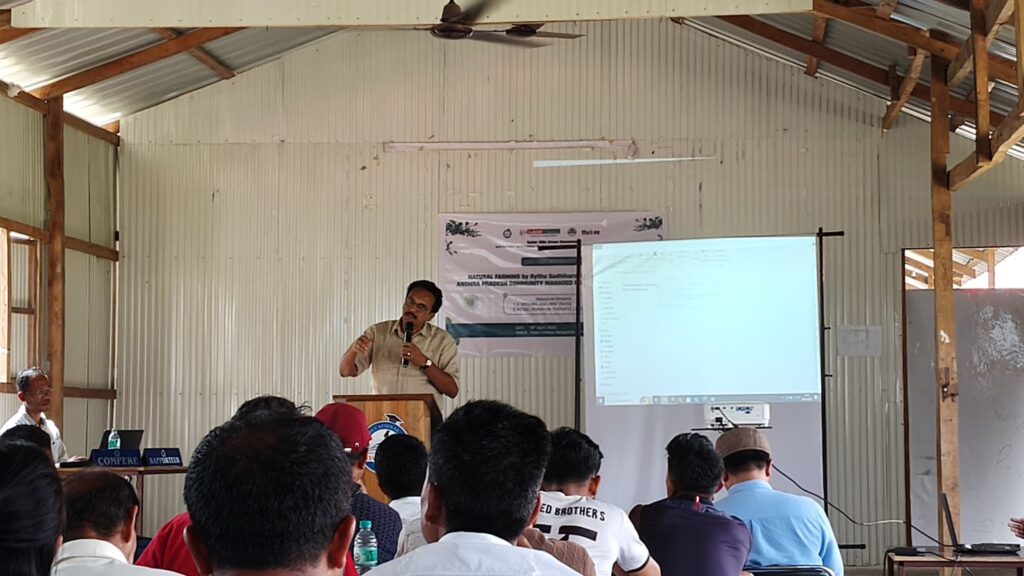
The second session, led by Pu Michael Suantak, focused on “AI and ICT as Force Multipliers.” He demonstrated the use of AI-based tools, including the Eimi AI App, for multilingual translation, plant identification, and digital learning. He underlined the growing role of artificial intelligence in education, agriculture, and administration, particularly in addressing language barriers in tribal communities.
The programme concluded with a vote of thanks delivered by Pu Helun Hangshing, Secretary of the Board of Management, Oasis College. He acknowledged the contributions of organisers, resource persons, and participants, and expressed hope that such initiatives would promote sustainable agriculture and community development in Sadar Hills and beyond.