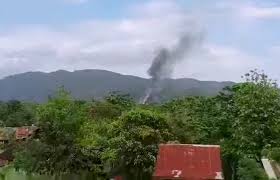
In a chilling escalation along the volatile India-Myanmar frontier, Molnoi, a historic Kuki village near Border Pillar No. 113 in Manipur’s Kamjong sector, was set ablaze on May 12 afternoon in what villagers alleged was a coordinated arson attack by suspected armed cadres linked to the NSCN Eastern Flank, triggering fresh alarm over the deepening insecurity stalking indigenous settlements along the sensitive border belt.
The attack, which reportedly unfolded at approximately 2:30 PM IST, left large sections of the village in ruins as armed militants allegedly stormed the settlement and torched homes in broad daylight. Villagers said at least 13 houses out of nearly 20 were reduced to charred debris in the assault, wiping out substantial portions of the ancestral settlement and forcing terrified residents to flee for their lives. No casualties were reported, as panic-stricken families escaped before the attackers advanced deeper into the village.
The burning of Molnoi has sent shockwaves across Kuki-Zo communities, with the incident being viewed not merely as an act of arson but as a direct assault on vulnerable indigenous habitation along one of the region’s most fragile geopolitical fault lines.
Amid mounting outrage, Manipur Police, through its official X handle, stated that Molnoi Kuki village is located inside Myanmar territory, approximately two kilometres from Border Pillar No. 113 in Kamjong District, Manipur, thereby placing the incident beyond the immediate territorial jurisdiction of Indian soil while underscoring the grave cross-border security implications of militant activity in the region.
The Kuki Organisation for Human Rights Trust (KOHUR) in a blistering condemnation of what it described as a “barbaric and cowardly” act of terror following the burning of Molnoi Kuki village along the Indo-Myanmar international border, accusing Tangkhul armed militants of carrying out a calculated assault on an indigenous Kuki settlement and warning that the attack represents a grave escalation in the continuing crisis faced by Kuki-Zo communities in the region.
The Kuki rights body said the razing of Molnoi village was not merely an isolated act of violence but a “premeditated act of ethnic aggression” that reduced an ancestral Kuki settlement to ashes, destroyed civilian homes and livelihoods, and forcibly displaced innocent women, children and the elderly.
The organisation asserted that the attack constitutes a flagrant violation of human rights, an assault on constitutional order, and part of a broader campaign allegedly aimed at erasing the Kuki-Zo presence from their ancestral territories along the sensitive Indo-Myanmar frontier.
Describing Molnoi as a long-settled indigenous Kuki village inhabited for generations, KOHUR alleged that the deliberate targeting of civilian infrastructure bears all the hallmarks of systematic ethnic cleansing. It expressed profound alarm over what it called a sustained pattern of aggression by Tangkhul-led armed groups against vulnerable Kuki villages, claiming that such attacks are being executed under an apparent shield of impunity despite ceasefire arrangements and constitutional safeguards.
The organisation further questioned the prevailing security architecture in the border belt and sharply criticised what it termed the inability — or unwillingness — of the State to protect vulnerable indigenous populations.
KOHUR demanded the immediate deployment of adequate central security forces to Molnoi and adjoining Kuki villages to prevent further violence and ensure the safe return of displaced residents.
It also called for a high-level, independent and time-bound investigation into the village burning, with identification, arrest and prosecution of all perpetrators and alleged handlers under the strictest provisions of law, including the Unlawful Activities (Prevention) Act.
The human rights body further urged the Ministry of Home Affairs to urgently review the conduct of armed groups functioning under Suspension of Operations and ceasefire frameworks, and to initiate decisive legal action against any organisation found complicit in the attack.
In addition, KOHUR sought immediate relief, rehabilitation, reconstruction support and full compensation for affected families, alongside the establishment of permanent security infrastructure, including a dedicated outpost, in Molnoi and other repeatedly targeted Kuki border villages.
Reaffirming that the indigenous Kuki-Zo people have inhabited the Indo-Myanmar hill tracts since time immemorial, KOHUR declared that any attempt by armed factions to uproot them through “fire, terror or coercion” would be resisted through every lawful and constitutional means.
Expressing unwavering solidarity with the people of Molnoi village, the organisation warned that both the silence of those who should speak and the inaction of those who should act “will be remembered.”