Lamka: The Kuki Organisation for Human Rights Trust (KOHUR) has submitted a detailed memorandum to the Election Commission of India (ECI), raising serious concerns over the ongoing Special Intensive Revision (SIR) of electoral rolls in Manipur and warning that thousands of internally displaced persons (IDPs) risk being disenfranchised if special safeguards are not immediately introduced.
In the memorandum issued yesterday, and addressed to the Chief Election Commissioner in New Delhi, KOHUR sought urgent intervention to protect the voting rights of displaced citizens affected by the ongoing ethnic violence in Manipur. The organisation requested the Commission to adopt what it described as a “displacement-sensitive enumeration protocol” during the ongoing electoral roll revision exercise.
According to the memorandum, the Enumeration Phase of the SIR began in Manipur on May 30 as part of the third phase of the nationwide revision exercise ordered on May 14. KOHUR stated that Manipur presents a unique and exceptional situation compared to the other states included in the current phase, namely Odisha, Mizoram and Sikkim.
The organisation pointed out that Manipur is the only state among the four where a large section of the electorate has been forcibly displaced from their ordinary places of residence due to ethnic violence and continues to live in relief camps or outside the state. Citing figures obtained through a Right to Information disclosure, KOHUR stated that 58,821 displaced persons were recorded across 174 relief camps as of March 2026, while many others remain sheltered in states such as Mizoram and Meghalaya.
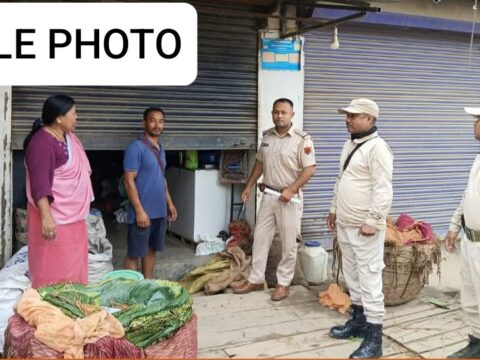
KOHUR argued that the SIR process, which relies heavily on house-to-house enumeration by Booth Level Officers (BLOs), does not adequately account for citizens whose homes have been destroyed or who cannot safely return to their original constituencies. The memorandum noted that displaced persons living in relief camps or outside the state may not be reachable through the ordinary enumeration mechanism.
The human rights organisation further warned that the displacement in Manipur broadly follows community lines and exists across recognised buffer zones separating hill and valley districts. In such a scenario, it cautioned that the current enumeration model carries a “real and foreseeable risk” of disproportionate deletion of displaced electors from the draft electoral rolls scheduled to be published on July 5.
KOHUR observed that while the Election Commission has repeatedly stated that “no eligible citizen is left out,” it has not publicly clarified how displaced electors in Manipur would be enumerated, verified or retained in the electoral rolls.
The memorandum also highlighted the lack of clarity regarding documentation requirements for electors who lost identity and residence documents when their homes were destroyed during the violence. It expressed concern over the short timeline of the revision process, noting that enumeration ends on June 28, draft rolls will be published on July 5, claims and objections will close on August 4, and final rolls are scheduled for publication on September 6.
KOHUR maintained that while it respects the constitutional authority of the Election Commission under Article 324 of the Constitution and the Representation of the People Act, 1950, the revision process should not unintentionally disenfranchise citizens whose displacement resulted from violence beyond their control.
Referring to the legal framework governing electoral rights, the organisation argued that internally displaced persons continue to remain “ordinarily resident” citizens of their constituencies under Section 20 of the Representation of the People Act, 1950, and therefore retain their entitlement to registration as electors despite displacement.
The memorandum also pointed out that the displaced population of Manipur remains under the continuing supervision of the Supreme Court of India and is covered by various relief and rehabilitation measures undertaken by the National Legal Services Authority (NALSA) and the state government.
As part of its recommendations, KOHUR urged the Election Commission to publish a clear displacement-sensitive enumeration protocol specific to Manipur.
The organisation demanded that no displaced elector should be removed from the electoral rolls merely due to non-availability at their original residence. It also sought special instructions directing BLOs to conduct enumeration at relief camps and present places of shelter while maintaining linkage with the elector’s home constituency.
Among other measures, KOHUR requested adoption of a “relaxed and humane” documentation standard for displaced persons who lost their identity papers during the violence. It proposed acceptance of alternative documents such as relief camp records, earlier electoral roll entries and certificates issued by camp or district authorities.
The organisation further called for camp-based enumeration drives, deployment of dedicated BLOs for relief camps and coordination with electoral authorities in Mizoram and Meghalaya for displaced electors currently residing outside Manipur.
KOHUR additionally sought the establishment of a published grievance and tracking mechanism that would allow displaced electors to verify their inclusion in draft rolls and seek corrections if omitted. It also requested extension of the claims-and-objections period for displaced electors if circumstances require.
In its concluding remarks, the organisation stated that the integrity of the electoral rolls and the protection of displaced citizens’ franchise rights are “not competing objectives but complementary ones.” It urged the Election Commission to issue a public clarification on safeguards available for internally displaced electors in Manipur under the ongoing SIR exercise.
The memorandum was signed by KOHUR Chairman H.S. Benjamin Mate and copies were forwarded to the Chief Electoral Officer of Manipur and the National Human Rights Commission.