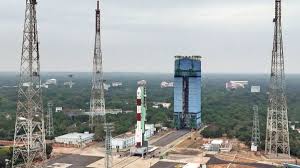
The Indian Space Research Organisation (ISRO) suffered a major blow on Monday when its first launch of the year, the PSLV-C62 mission, failed to reach its intended orbit due to issues with the rocket. The mission carried the EOS-N1 earth observation satellite along with 15 other payloads, including seven from Brazil and Nepal. All payloads were lost.
ISRO confirmed the anomaly on X, stating, “The PSLV-C62 mission encountered an anomaly during the end of PS3 (third stage) of the vehicle. A detailed analysis has been initiated.” No further details were provided.
This marks the second consecutive PSLV failure, raising concerns about the reliability of ISRO’s most successful rocket. In May 2025, the PSLV-C61 mission carrying EOS-09 also failed during the third stage. The previous failure was traced to a sudden drop in pressure in the third-stage engine’s combustion chamber, but the exact cause of Monday’s failure remains unknown.
The PSLV has been ISRO’s workhorse, responsible for 65 of the agency’s 105 launches to date, with only four previous failures. However, two setbacks within six months tarnish an otherwise strong record. The PSLV is also central to ISRO’s commercial launch business, which has placed more than 430 satellites from 34 countries into orbit, generating significant revenue and international credibility. Monday’s failure, therefore, has broad implications.
The rocket appeared to perform normally for the first nine minutes after lift-off, completing its vertical ascent. However, during the orbital insertion phase, the vehicle deviated from its trajectory. ISRO Chairman V. Narayanan said, “Close to the end of the third stage, we observed disturbances in the vehicle’s roll rates, leading to a deviation in the flight path. We are analyzing the data and will report back at the earliest.”
ISRO has faced a rocky start to the year before. Last year, its first launch of 2025 involving the navigation satellite NVS-02 encountered problems with the satellite itself, though the GSLV-F15 rocket performed successfully.
ISRO had planned at least six launches in the first quarter of 2026, including the first unmanned mission of the Gaganyaan human spaceflight program. Monday’s setback may force a revision of this schedule.