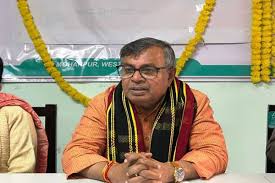
Tripura’s Agriculture and Farmers’ Welfare Minister, Ratan Lal Nath, underscored the significance of preserving cultural traditions for maintaining health and well-being, while also emphasizing the crucial role of Self Help Groups (SHGs) in bolstering the rural economy.
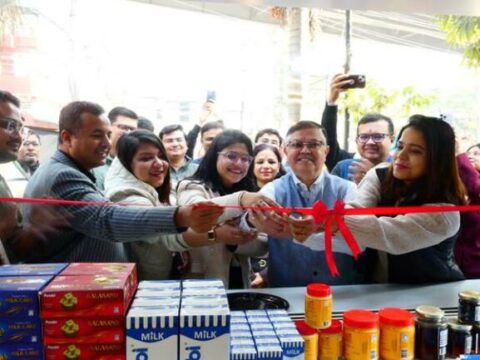
Speaking at the Pithe Puli Utsav at Kathalia HS School in Dhanpur, Sepahijala district, the Minister pointed out that globalization has changed traditional eating habits. “In the past, our mothers would prepare healthy Bengali treats like pithe, mua, nadu, murir mua, and chirar mua during this season. Today, however, street food has become more common, contributing to an increase in stomach-related health issues. It is vital to preserve our culinary traditions for the sake of our health. I am not against other foods, but our culture has immense value,” he remarked. The Minister described the Pithe Puli Utsav as not just a food festival but as a celebration of culture, tradition, and self-reliance.
Discussing the government’s efforts, Nath highlighted that Tripura now has 54,627 SHGs with nearly 4.89 lakh members. “Before 2018, about 3,506 groups received a revolving fund of Rs 4.26 crore. In contrast, our government has allocated Rs 75 crore to 36,530 groups,” he said. Bank loans for SHGs have also seen significant growth, rising from Rs 4 crore for 900 groups to nearly Rs 1,896 crore for over 1 lakh groups. He added that more than 1 lakh women have achieved financial independence, earning the title of ‘Lakhpati Didis.’
The Minister emphasized that empowering women through SHGs not only benefits individual families but also contributes to the broader development of both the state and the nation, aligning with the vision of “Ek Bharat, Shreshtha Bharat.” “As Prime Minister Narendra Modi has stated, modernization should go hand in hand with preserving our culture and traditions. Unlike past governments that ignored such initiatives, our SHGs are actively contributing to strengthening the rural economy,” Nath concluded.