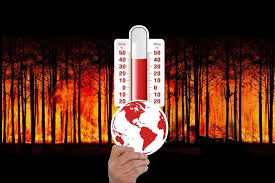
A new study from the University of Oxford warns that extreme heat will affect more people and arrive sooner than expected as the world approaches 1.5°C warming. By the coming decades, 41% of the global population could face extreme heat, up from 23% in 2010. Countries like India, Nigeria, Indonesia, Bangladesh, Pakistan, and the Philippines will see the largest populations affected, while Central African Republic, Nigeria, South Sudan, Laos, and Brazil may experience the steepest temperature spikes.
Colder nations will see dramatic relative increases in hot days, with Austria and Canada doubling their hot days, the UK, Sweden, and Finland rising 150%, Norway 200%, and Ireland 230%. Existing infrastructure in these regions, often built for cooler climates, may struggle, making early adaptation—like installing air-conditioning—critical.
Rising heat will also boost global energy demand for cooling, increasing emissions despite falling heating needs in northern countries. The study includes a new open-source global dataset mapping heating and cooling demand, providing a tool for climate-aware planning and adaptation.