A young Kuki-Zo woman who was allegedly abducted and subjected to brutal sexual violence during the early days of Manipur’s ethnic conflict in May 2023 has died after nearly three years of battling severe injuries and trauma, sparking renewed outrage over delayed justice and institutional failure.
The survivor died on January 10, 2026, at a private hospital in Guwahati, where she had been receiving long-term treatment for grave physical and psychological injuries. She was around 20 years old at the time of her death.
The incident occurred on May 15, 2023, when the woman was just 18. A resident of New Checkon Colony in Imphal—then a mixed-ethnic area that later became a flashpoint of violence—she had stepped out to withdraw money from an ATM when she was allegedly intercepted.
According to survivor testimony and records compiled by community organisations, she was assaulted, questioned about her identity, and subsequently handed over to an armed group. The assailants reportedly blindfolded her, tied her hands, and moved her across several locations in Imphal, including Wangkhei Ayangpali and Langol, where she was subjected to repeated sexual and severe physical assault.
Left in a critical condition and presumed dead, she managed to escape. A Muslim autorickshaw driver later found her and ensured she received medical attention.
After initial treatment in Manipur, she was shifted to Guwahati due to the severity of her injuries. Medical sources said extensive uterine damage, recurrent infections, and long-term trauma-related complications steadily worsened her condition, ultimately leading to her death.
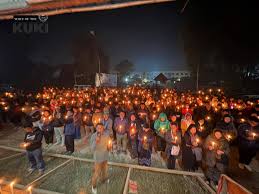
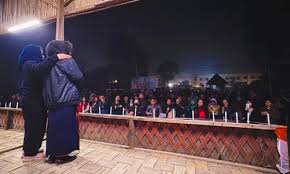
The Committee on Tribal Unity (CoTU) expressed deep sorrow over her passing, describing it as both a personal tragedy and a damning reflection of systemic apathy. Candlelight vigils were held at Brigadier M. Thomas Ground in Kangpokpi and at the Wall of Remembrance in Churachandpur under the Indigenous Tribal Leaders’ Forum (ITLF), where community members paid tribute to her prolonged struggle for justice.
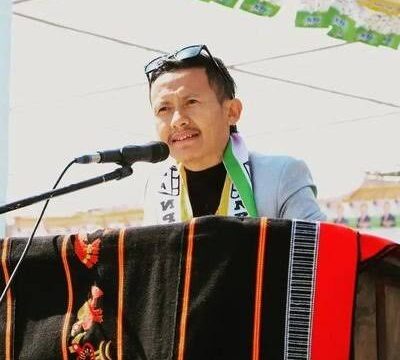
CoTU spokesperson Ng. Lun Kipgen said the survivor endured years of suffering without seeing justice delivered. “She survived the violence, but not the silence. She spent her final years moving between hospital wards and court files, between pain and hope, only to face delay after delay,” he said.
An FIR was registered under Sections 354, 307, 364, 376 and 506 of the Indian Penal Code (Bharatiya Nyaya Sanhita), along with provisions of the Scheduled Castes and Scheduled Tribes (Prevention of Atrocities) Act. However, nearly three years later, no accused has been brought to justice, community leaders alleged.
The Kuki Women’s Union (KWU), Sadar Hills, strongly condemned the delay. Its president, Nengboi Hmar, said the survivor’s death while awaiting justice exposed a grave failure of governance. “Justice delayed in this case is not just justice denied—it is humanity denied,” she said.
Hmar added that the case reflects the deep mistrust and fear gripping affected communities, noting that repeated failures to ensure safety and accountability have made peaceful coexistence increasingly difficult.
Community leaders said the woman’s death has come to symbolise the suffering of countless victims of the Manipur conflict whose voices remain unheard, raising urgent questions about accountability, justice delivery, and the protection of women during ethnic violence.