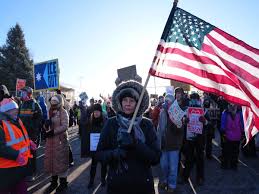
Protesters across the United States on Friday responded to a call for a mass “national shutdown,” urging people to abstain from work, school and shopping to oppose what activists describe as an aggressive federal immigration enforcement campaign under the Trump administration. The strike — branded by organizers as a way to highlight the role of migrant and immigrant communities in everyday life and to pressure federal authorities — mobilized student walkouts, business closures, and demonstrations in dozens of cities including New York, Los Angeles, Chicago, Portland and Minneapolis.
The protests were coordinated by a coalition of activists, student groups, labor organizations and faith leaders who have been organizing against recent federal immigration operations. Many demonstrators carried signs calling for the abolition of Immigration and Customs Enforcement (ICE) and an end to what they described as the agency’s “reign of terror” in communities.
Outrage Over Fatal Shootings by Federal Agents
The nationwide action was largely driven by public fury over the fatal shootings of U.S. citizens by federal immigration agents. Among the most prominent is the case of Alex Pretti, a 37‑year‑old intensive care nurse in Minneapolis who was shot and killed during an immigration enforcement operation on January 24, 2026. Videos shared online showed him holding a cellphone and not posing a threat to officers at the time he was tackled and shot, contradicting initial federal statements that he had brandished a weapon.
Another killing earlier this month involved Renée Good, fatally shot by an ICE officer while in her vehicle, which also helped fuel the protests. The deaths of Pretti and Good — both U.S. citizens — have heightened scrutiny of ICE and Border Patrol’s use of lethal force and sparked calls for accountability and independent investigations.
In response to the controversy, the U.S. Department of Justice has opened a federal civil rights investigation into Pretti’s killing, assigning the FBI to lead the probe and examine the circumstances surrounding the shooting. Federal authorities have faced pressure from lawmakers, advocates and family members to ensure transparency and justice.
Large Demonstrations in Major Cities
In Minneapolis, hundreds of protesters gathered in freezing conditions near federal buildings and the site of Pretti’s death, chanting and demanding the withdrawal of ICE agents from the region. Many community members and activists have continued to hold vigils and direct actions in response to what they see as an escalating federal enforcement presence in their neighborhoods.
Across the country, major urban centers saw significant turnout. In New York City, thousands marched through the streets shouting slogans like “Abolish ICE!” and “No ICE, No KKK, No Fascist USA!” as part of the broader movement criticizing federal immigration policy. Demonstrators emphasized the importance of solidarity across racial and economic lines.
Protests also continued in other hotspots including Los Angeles, where crowds clashed with authorities outside federal detention centers, and in parts of Michigan, Georgia and Maine, where student walkouts and local rallies took place.
Broader Political Context and Responses
The protests coincide with ongoing debates in Congress over funding for Homeland Security and immigration enforcement. Some political leaders have used the demonstrations to urge reforms and reinforce calls for federal accountability, while others defend immigration operations as necessary for border security.
In Minnesota, even local cultural institutions and sports teams have weighed in. The NBA’s Minnesota Timberwolves issued a statement calling for unity and compassion following the deaths of Good and Pretti, and postponed a game to honor those affected by the unrest.
Impact on Daily Life
Several schools in states including Arizona and Colorado preemptively cancelled classes expecting high absenteeism due to student participation in walkouts and protests. Some businesses joined the strike by closing or donating a portion of their proceeds to immigrant-rights organizations. Others remained open but expressed support for the cause.
Overall, the combination of high‑profile deaths, grassroots activism and coordinated strike actions has made this moment one of the most significant waves of civil protest in recent U.S. history around immigration policy and federal enforcement practices.