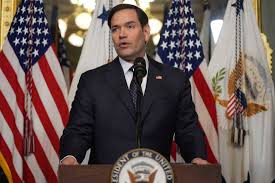
U.S. Secretary of State Marco Rubio told U.S. lawmakers that the Trump administration is pursuing a phased approach to its policy on Venezuela. His remarks came during a congressional hearing on Washington’s strategy for the crisis-hit South American nation.
Rubio said the plan begins with immediate stabilization, moves into economic recovery, and ultimately leads to a democratic transition aimed at leaving Venezuela stable, prosperous, and friendly to the United States. He described the situation under former President Nicolás Maduro as a direct threat to U.S. security interests, saying the country had become a base of operations for global rivals including Iran, Russia, and China, posing what he called a “strategic risk” in the Western Hemisphere.
As part of efforts to avert chaos and restore order, Rubio outlined a temporary mechanism that allows Venezuela to sell oil currently under U.S. sanctions at market prices, with the proceeds overseen by Washington to support essential services and economic functions.
Rubio also confirmed plans to reopen a U.S. diplomatic presence in Caracas to engage not only with government authorities but also with civil society and opposition figures. This step is seen as part of broader efforts to encourage political opening and help steer Venezuela toward free and fair elections.
Addressing concerns about military involvement, Rubio emphasized that the administration does not anticipate further military action in Venezuela, although it retains the option if U.S. interests are threatened—a point he stressed amid broader debate over executive authority and foreign policy.